What Is a Project Manager? Roles, Responsibilities and What They Do
Table of contents
If you are looking for new career opportunities or are simply intrigued to know what that person who coordinates teams and projects in companies does, you have come to the right place. The role of Project Manager has become one of the most sought-after professions in every sector and it is no coincidence.
Imagine that a company wants to launch a new mobile app. The idea is good and the team is ready, but there is one key question that almost no one asks at the beginning: who will make sure that everything actually comes to fruition?
Someone has to decide what comes first, who is responsible, and how to avoid wasting time and money when problems arise. That someone is the Project Manager.
And here’s the interesting part: when this figure is missing—or doesn’t have a clear role—problems don’t appear all at once, but little by little. First a small delay, then an unnecessary meeting, then a poorly communicated change… until the project spirals into chaos. Later on, you’ll see why this happens and how a Project Manager avoids exactly that scenario.
What is a Project Manager and what is their role within a company?
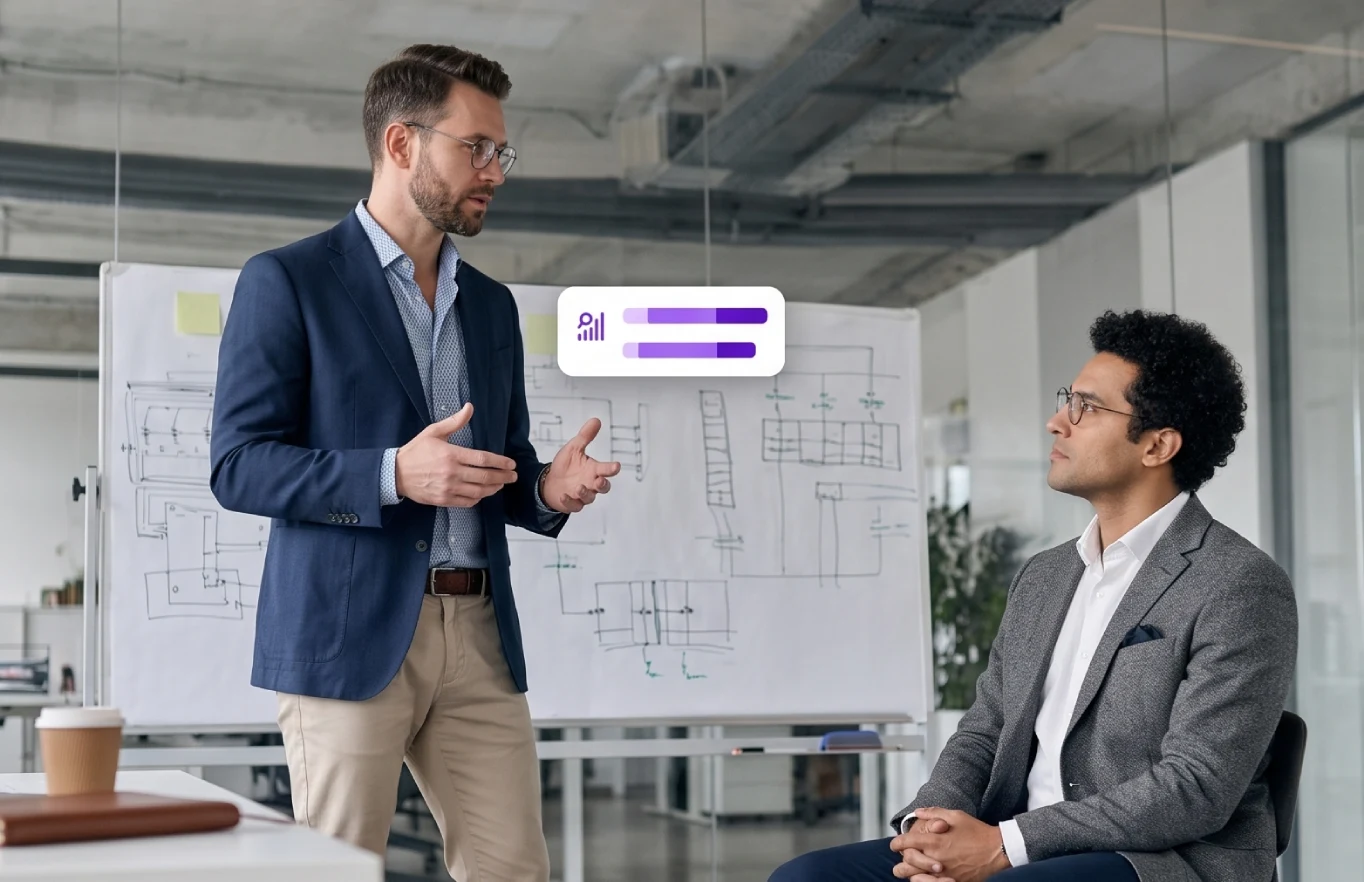
A Project Manager (PM) is the professional responsible for leading, planning, executing, and closing projects, ensuring that established objectives, deadlines, and budgets are met.
It is not just a matter of organizing tasks on a list. The Project Manager makes strategic decisions, solves problems on the fly, and acts as a link between teams, senior management, and clients, managing resources, risks, and communication to ensure the success of the deliverable.
This role requires a comprehensive view of the project, covering both the technical aspects and the human dynamics of the team. Unlike a department head, who manages ongoing operations, the project manager works with temporary initiatives that have a defined start and end, such as launching a product, implementing a computer system, organizing an event, or building infrastructure.
What are the responsibilities of a project manager
The main responsibilities of a Project Manager are wide-ranging and varied, but they all revolve around the same core objective: ensuring the success of the project.
Project planning
It all starts with a solid plan. The project manager defines the scope, sets specific objectives, identifies deliverables, and creates a detailed schedule. This phase is critical because a poorly planned project is doomed to failure from the outset.
Time and resource management
Resources are always limited: time, money, people, and technology. The Project Manager must optimize their use, assigning tasks according to the capabilities of each team member and adjusting priorities when unforeseen events arise.
Team coordination
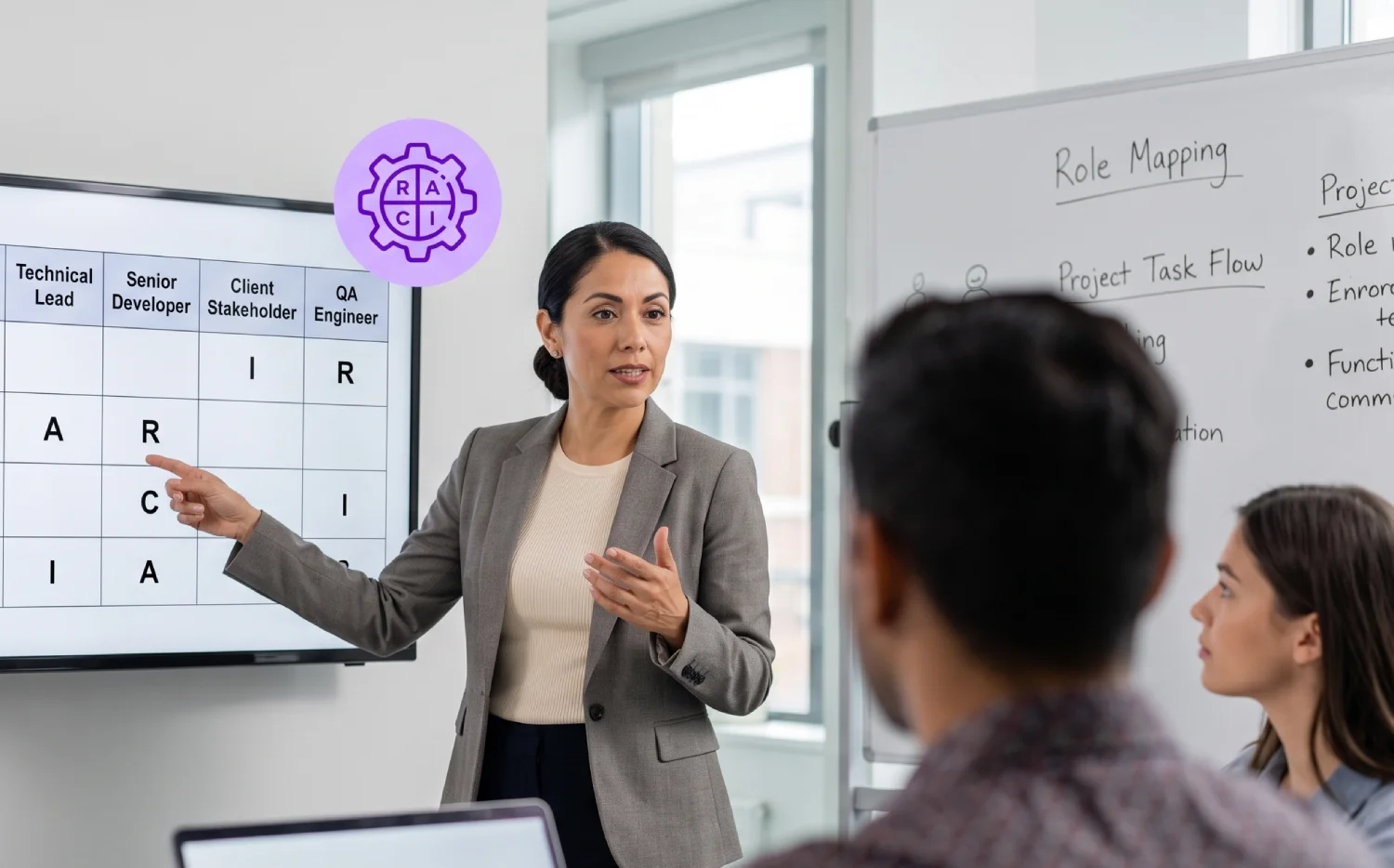
A project involves different professionals: designers, developers, marketing specialists, external consultants. The project manager ensures that everyone works in sync, avoiding duplication and gaps in responsibility.
Budget control
Each project has an assigned budget. Controlling expenses, anticipating deviations, and justifying investments are fundamental parts of the job. A good project manager knows when it is necessary to invest more and when expectations need to be adjusted.
Risk management
Unforeseen events are inevitable. The project manager identifies potential risks before they occur and prepares contingency plans to minimize their impact.
Communication with clients and stakeholders
Keeping all stakeholders informed is essential. The Project Manager prepares progress reports, organizes follow-up meetings, and manages expectations, ensuring that there are no unpleasant surprises at the end of the project.
What does a project manager do on a day-to-day basis?
Now that you know the theoretical responsibilities, let’s see how this translates into the real day-to-day life of a Project Manager.
The day usually begins by reviewing the tasks that were completed yesterday, which ones are in progress, and what obstacles have arisen. This is usually done using management tools such as Asana, Trello, Jira, or Microsoft Project.
Then come the meetings, lots of meetings. A quick sync session with the team (the famous “daily stand-ups” in agile methodologies), progress meetings with clients, problem-solving sessions with stakeholders… A Project Manager can spend between 50% and 70% of their time communicating with different people.
Between meetings, decisions must be made: Do we prioritize functionality A or B? Do we reallocate resources to meet a critical deadline? Do we escalate a problem to management or resolve it internally? These decisions require quickly analyzing information and considering multiple variables.
There is also a lot of task tracking to verify that what was planned is being executed, identify delays, and help unblock technical or bureaucratic impediments. And, of course, updating documentation, reports, and schedules to reflect the actual status of the project.
At the end of the day, a good manager spends time on strategic reflection on the project.
What skills does a project manager need
But what makes a good project manager? Beyond technical knowledge, it is the combination of leadership, communication, decision-making, and adaptability that truly defines an effective PM.
Hard skills
Hard skills are competencies acquired through training and practical experience. They are directly related to project management and are key to planning and controlling its execution.
- Schedule and budget management
- Project risk management
- Stakeholder management
- Scope definition and project plan creation
- Roadmap development
- Project team coordination and management
- Data analysis, performance metrics, and KPIs
- Specific knowledge of the sector or industry
Soft skills
Soft skills enable PMs to lead people, facilitate collaboration, and resolve conflicts. They are crucial to the success of a project, especially in complex environments.
- Clear and effective communication
- Leadership without formal authority
- Organization and time management
- Problem solving and critical thinking
- Collaboration and teamwork
- Negotiation and expectation management
- Conflict management
- Adaptability and emotional intelligence
Technical skills
Technical skills relate to the use of specific tools, software and frameworks that facilitate day-to-day project management.
- Knowledge and application of agile methodologies such as Scrum and Kanban
- Use of project management software (Asana, Jira, Trello, Microsoft Project, among others)
- Use of Kanban boards and visual tracking tools
- Handling of reporting and documentation tools
- Understanding of collaborative and digital communication tools
Depending on the sector, these technical skills are complemented by knowledge specific to the environment in which the project is developed.
What degree do you need to be a project manager
So, what do you need to be a project manager? There is no single path, but a mix of training, certifications, practical experience, and soft skills is usually required.
- PMP (Project Management Professional): This is the most widely recognized certification worldwide and is aimed at experienced Project Managers. It accredits solid knowledge in predictive, agile, and hybrid management, based on PMI best practices, and is especially valued in large companies and complex projects.
- PRINCE2: Very popular in Europe, it offers a structured, process-based approach to project management. It focuses on control, business justification, and project governance, and has two main levels: Foundation and Practitioner.
- Agile Certifications (Scrum Master, PMI-ACP): Designed for changing and highly uncertain environments. Scrum (CSM, PSM) focuses on agile team and sprint management, while PMI-ACP validates a broader view of agile methodologies such as Scrum, Kanban, Lean, or XP.
- CAPM (Certified Associate in Project Management): Ideal for those just starting out in project management. It requires no prior experience and provides a solid foundation in PMI concepts, processes, and terminology, making it an excellent gateway to PMP.
- Lean Six Sigma: Focused on process improvement, operational efficiency, and waste reduction. It is especially useful for project managers working in industrial, service, or operations environments who seek to maximize quality and performance.
The choice of certification depends on your previous experience, the sector in which you work, and your medium- and long-term professional goals.
Most commonly used work methodologies
Traditional methodology (Waterfall)
The Waterfall methodology follows a sequential and linear approach: first, all requirements are defined, then the solution is designed, implemented, tested, and finally delivered. Each phase must be completed before moving on to the next, which provides a high level of control and predictability.
It is particularly suitable for projects with clear requirements from the outset, low uncertainty, and few changes, such as construction, engineering, regulatory projects, or highly defined system implementations. Its main advantage is clarity in scope, deadlines, and costs, although its greatest limitation is the difficulty in adapting to changes once the project has started.
Agile methodologies (Agile, Scrum, Kanban)
Agile methodologies are based on iterative and incremental work, prioritizing continuous value delivery and the ability to adapt to change. Instead of planning everything in detail from the outset, the project evolves through short cycles in which progress is reviewed and the course is adjusted according to the feedback received.
Scrum organizes work into fixed-length sprints, with well-defined roles and ceremonies, and is ideal for complex projects where requirements change frequently. Kanban, on the other hand, focuses on visualizing workflow and limiting work in progress, offering greater flexibility and being very useful in support or continuous improvement environments.
A good Project Manager does not stick to a single methodology: they know how to choose or combine traditional and agile approaches depending on the type of project, the level of uncertainty, the culture of the organization, and the maturity of the team.
Career paths and job opportunities
Many professionals start their careers as an assistant project manager, supporting planning, reporting, and coordination tasks before moving into full Project Manager roles. The most common sectors are:
- Technology sector: From startups to large technology corporations, software development, system implementation, and digital transformation projects require specialized project managers.
- Consulting: Consulting firms manage multiple simultaneous projects for different clients, so the demand for project managers is constant and high.
- Construction and engineering: Infrastructure, building, and public works projects have historically been the natural domain of project managers.
- Marketing and communication: Campaign launches, events, corporate rebranding… modern marketing is essentially project management.
- Pharmaceuticals and healthcare: New drug development, hospital system implementation, and research projects require professional management.
- Finance and banking: Implementing new financial products, system migrations, and compliance projects require project managers with knowledge of the sector.
- Education and training: Developing training programs, educational digitization, and academic research projects.
The demand for project managers has grown steadily in recent years, and projections indicate that it will continue to do so. The reason is simple: as long as companies continue to undertake transformation, innovation, and improvement projects, they will need professionals to lead them successfully.
Frequently asked questions about Project Managers
Is a Project Manager the same as a boss?
Not exactly. Although they exercise leadership, Project Managers do not normally have hierarchical authority over team members. They lead through influence, knowledge, and coordination skills, not through a position of power. Team members usually report to their functional managers, but they collaborate with the Project Manager on the specific project.
How much does a Project Manager earn?
Salaries vary significantly depending on the country, sector, experience, and size of the company. In general, it is a well-paid profession. A junior Project Manager may start with modest salaries, but with experience and certifications, the figures can increase considerably. The technology, finance, and consulting sectors tend to offer the best compensation.
Is it a profession with a future?
Absolutely. Digital transformation, globalization, and the growing complexity of business make professional project management more necessary than ever. In addition, the skills of a Project Manager (leadership, communication, problem solving) are difficult to automate, which protects the profession from automation.
Can you be a project manager without experience?
It’s difficult but not impossible. Most companies prefer candidates with previous project experience, even if it’s in junior roles. A common strategy is to start as a project coordinator, analyst, or assistant, participate in projects to learn the process, and gradually take on more responsibilities. Training and certifications can partially compensate for a lack of experience.
Explore our Project Management training courses
Being a Project Manager is a demanding but very rewarding career. It allows you to lead real projects, develop a comprehensive view of the business, and access multiple professional opportunities.
If you enjoy solving problems, coordinating people, and turning ideas into results, this could be the profession for you. The best time to start is now.
At BePM, we offer international and professional training to boost your career as a Project Manager. Professionals who move forward!What Is a Project Manager and What Is Their Role Within a Company?

Written by Priscilla Medina
Project Manager certified by the Project Management Institute (PMI) as PMP®, ACP®, RMP®, and PBA®, Scrum Master, Agile Coach, and Agile Leader, among other agile certifications. She has more than seven years of experience leading projects in international corporate environments, applying predictive, agile, and hybrid methodologies in real high-impact projects for large accounts. As a good PM, she also organizes her busy schedule to serve as Vice President of PMI Levante (PMI Spain).

About us
We are an international academy founded in Switzerland that trains and supports professionals from around the world and at all levels in their development in Project Management.
Follow us on social media!
Subscribe to the newsletter
Receive practical advice, discounts for your exam, valuable information, and the latest news and key resources in Project Management.
Join our PM community!