
How to pass the PMP exam on your first attempt
Tabla de contenidos
Let’s be honest, the thought of failing the PMP exam is stressful. You’ve invested months of experience, hours of study and a real commitment to your career. The last thing you want is to walk out of that testing center without the result you deserve.
Here’s the good news: the PMP certification remains the gold standard in project management in 2026 and thousands of professionals pass it every year, many on their very first attempt. The difference between those who pass and those who don’t isn’t raw intelligence. It’s strategy.
This guide will show you exactly how to pass the PMP exam in your first attempt from understanding the 2026 exam format and PMBOK 7 requirements to a week-by-week study plan that fits your schedule. Whether you’re new to project management or a seasoned professional seeking formal recognition, by the end you’ll know what to study, how to practice and how to walk into exam day with confidence.
Let’s get started.
In addition to experience, every candidate must complete 35 contact hours of formal project management education before applying commonly counted as PDUs (Professional Development Units). This is non-negotiable and it’s also your first opportunity to build a strong study foundation. BePM®’s PMP Certification Training satisfies this requirement while simultaneously preparing you for the exam.
Week 2’s Agile focus deserves particular attention if you want a deeper foundation in Scrum before your exam, BePM®’s Scrum Master Training and Certification provides exactly that. Throughout all four weeks, use BePM®’s PMP Exam Test Simulator daily. The simulator mirrors the real exam’s hybrid format, difficulty distribution and question types giving you the most accurate preparation environment available.
PMP certification requirements and time commitment
Before you start preparing, you need to qualify. The Project Management Institute (PMI) has two paths depending on your education level. Here’s a clear breakdown of what you need to apply: PMP Eligibility Requirements at a Glance| Requirement | With Bachelor’s Degree | Without Bachelor’s Degree |
|---|---|---|
| Project Management Education | 35 contact hours (PDUs) | 35 contact hours (PDUs) |
| Project Management Experience | 3 years (36 months) leading projects | 5 years (60 months) leading projects |
| Type of Experience | Non-overlapping experience in PM | Non-overlapping experience in PM |
| Application Process | Online via PMI.org + possible audit | Online via PMI.org + possible audit |
How long does it take to pass the PMP exam?
There are two distinct timelines to plan for: the application process and the study period.- Application timeline: Submitting your PMI application takes 1–2 hours to complete. PMI then reviews it within 5–10 business days. If selected for an audit (approximately 15–20% of candidates), expect an additional 4–6 weeks.
- Study timeline: Most candidates need between 6 and 12 weeks of dedicated preparation. If you’re following an intensive plan, it’s possible to be ready in as few as 30 days though this requires focused, daily study sessions (more on that below).
- Exam scheduling: Once approved, PMI gives you one year (with three attempts) to pass the exam. Schedule your exam date before you start studying it creates accountability.
Understanding the PMP exam format and scoring
The 2026 PMP exam consists of 180 questions delivered across two sessions with an optional 10-minute break. The exam is timed at 230 minutes total. Questions appear in multiple formats:- Multiple choice (single or multiple correct answers)
- Drag-and-drop (match or rank items)
- Fill-in-the-blank
- Hot spot (click on a diagram element)
How many questions should be correct to pass the PMP exam?
This is one of the most searched questions and one of the most misunderstood. PMI does not publish a fixed number of correct answers required to pass. Instead, the PMP uses a psychometric model that evaluates your performance across three domains:- Domain 1 – People: 42% of questions (leadership styles, team management, stakeholder engagement)
- Domain 2 – Process: 50% of questions (executing, monitoring, controlling work)
- Domain 3 – Business Environment: 8% of questions (strategy, compliance, benefits)
Scoring myths: Is there a fixed percentage required to pass?
The persistent myth that you need ‘61%’ or ‘70%’ to pass the PMP is outdated and potentially dangerous if you use it to calibrate your preparation. Here’s the truth:- PMI uses Item Response Theory (IRT), a psychometric model that weighs each question differently based on its statistical difficulty.
- A harder question answered correctly contributes more to your score than an easier one.
- Scoring is domain-weighted, not a flat percentage of 180 questions.
| 💡 Key Insight Focus on understanding the WHY behind correct answers not just memorizing which answer is right. The exam tests your ability to apply judgment in real project scenarios, not recall facts from a textbook. |
How hard is the PMP exam? (Real difficulty analysis)
The honest answer: harder than it used to be but highly passable with the right preparation. Here’s how the 2026 exam compares to previous years:- Pre-2021 exams were heavily process-based (PMBOK 6) built around the 5 project management phases predictable and rewarded memorization of inputs, tools and outputs.
- Post-2021 exams shifted toward situational judgment, Agile and hybrid frameworks. The ‘right answer’ often depends on context, not just process knowledge.
- 2026 additions: The growing integration of AI in project management including AI-assisted scheduling, risk prediction and resource optimization is now reflected in situational questions. Candidates familiar with PMBOK 7’s principle-based approach handle these questions with greater confidence.
The shift to PMBOK 7 and agile methodology
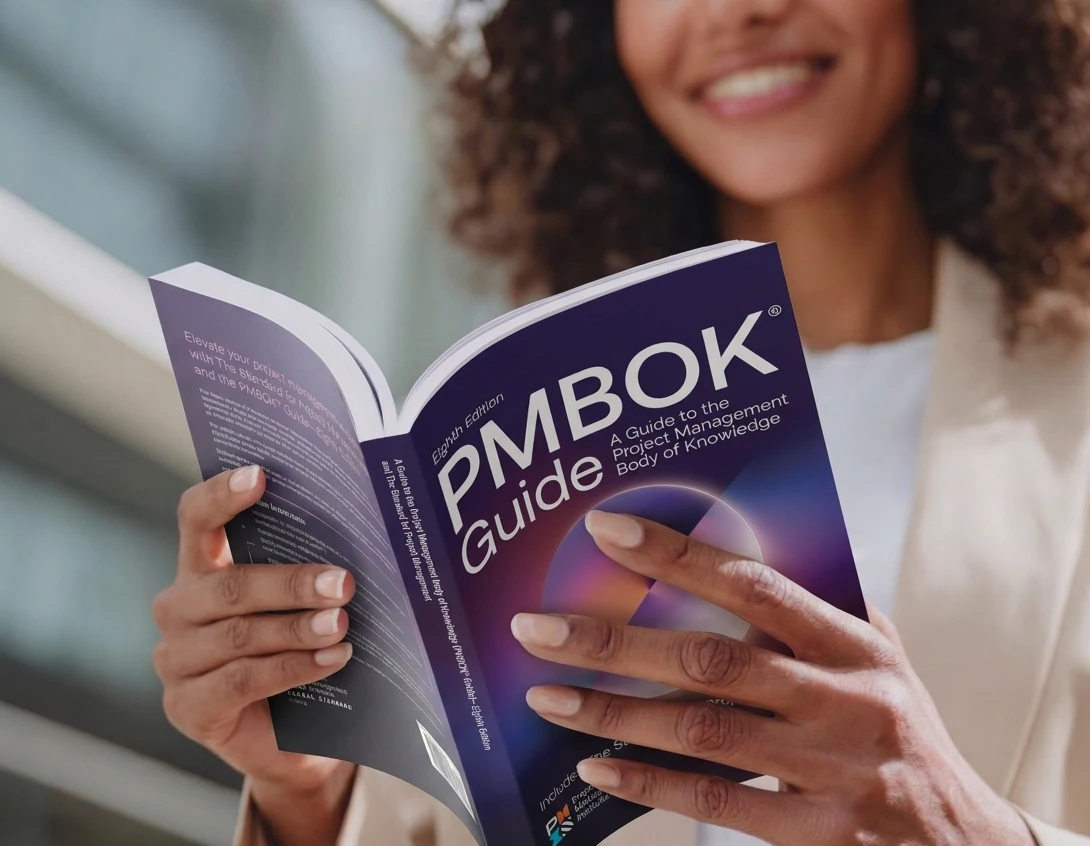
PMBOK 7 represents a fundamental philosophical shift from a process-based guide to a principle-based framework. Instead of memorizing 49 processes, you now need to internalize 12 project management principles and 8 performance domains. This shift rewards candidates who understand how to think like a project manager, not just what steps to follow. Combined with the equal emphasis on Agile methodologies (Scrum, Kanban, SAFe), the 2026 exam genuinely tests adaptive thinking. If you want to deepen your Agile expertise beyond the PMP, BePM®’s PMI-ACP Certification Training is the natural next step. For a comprehensive breakdown of PMBOK 7 vs. PMBOK 6 and what changed, see BePM®’s resource: What Is the PMBOK Guide and Latest Edition?How to pass the PMP exam in 30 Days: A proven study plan
Thirty days is aggressive but achievable if you’re organized, consistent and using the right tools. Think of your preparation like a project plan: it needs a clear objective, a defined timeline and measurable milestones. The non-negotiable element? A high-quality PMP exam simulator. Practice questions are not optional extras; they are the core mechanism by which you convert knowledge into exam-ready performance. Here’s the framework for 30-day success:- Daily commitment: 3–4 hours of focused study (not passive reading)
- Question volume: Minimum 500 practice questions across the 30 days
- Review discipline: Spend as much time reviewing wrong answers as answering questions
- Mock exams: Complete at least two full 180-question timed simulations before exam day
Week-by-week breakdown for rapid preparation
30-Day PMP Study Schedule| Week | Focus | Time | Key Topics & Activities |
|---|---|---|---|
| Week 1 | Foundation | 12–15 hrs | ECO review, PMBOK 7 principles, Predictive PM basics |
| Week 2 | Agile & Hybrid | 12–15 hrs | Scrum, Kanban, SAFe overview, Hybrid frameworks |
| Week 3 | Practice & Gaps | 14–16 hrs | 250+ practice questions, domain gap analysis, weak-area review |
| Week 4 | Simulation Sprint | 14–16 hrs | 2× full mock exams (180 Qs), timed reviews, final refinement |
| 📅 Pro Tip: Schedule Your Exam Before You Start Studying Having a fixed exam date transforms abstract preparation into a concrete deadline. Candidates who book their exam date upfront report significantly higher completion rates for their study plans. Book it, then commit to the schedule. |
Top tips and strategies for the new exam format
The 2026 PMP exam is a situational test it rewards applied judgment, not memorized definitions. These techniques will help you read, interpret and answer questions more effectively.- Read the question last. Start by reading the last sentence of the question to understand what’s actually being asked, then read the full scenario.
- Identify the role. Always ask: what would a senior project manager with good judgment do here? The correct answer is rarely the most reactive or the most passive.
- Recognize context cues. If the question mentions a ‘sprint’, ‘backlog’, or ‘retrospective’ you’re in an Agile context. If it mentions ‘baseline’, WBS, or ‘schedule variance’ you’re in a predictive context. The methodology matters enormously.
- Eliminate outliers first. On difficult questions, actively look for answers that are clearly wrong too extreme, too passive, or outside the project manager’s authority. Eliminating two options turns a 25% guess into a 50/50 decision.
- Don’t over-engineer Agile answers. A common mistake is to assume Agile means ‘do nothing formal’. The correct approach to Agile questions almost always involves collaboration, communication and transparency not skipping documentation or ignoring the sponsor.
Expert PMP exam tips to pass confidently
These strategies go beyond content knowledge and address the mental performance side of the exam:- Simulate real conditions. Take at least one full practice exam at the same time of day as your scheduled test. Your brain performs consistently when it’s used to the routine.
- Master the ‘best answer’ mindset. Many PMP questions have two reasonable answers. The correct one is the one that’s most proactive, most stakeholder-focused, or most aligned with PMI’s ethical standards. Strengthening your Agile leadership skills can sharpen this judgment significantly.
- Manage your time per question. You have approximately 1.28 minutes per question. Flag time-consuming questions and return to them. Never spend more than 2 minutes on a single question during your first pass.
- Trust your preparation on exam day. Anxiety narrows your thinking. If you’ve completed a proper study plan and used a quality simulator, you have everything you need. Take a breath and think through the scenario don’t rush.
- Review PMI’s Code of Ethics. When in doubt between two strong options, the one aligned with PMI’s Code of Ethics (honesty, responsibility, respect, fairness) is almost always correct.
Your path to becoming a certified Project Manager
The PMP certification in 2026 is more relevant than ever. It signals to employers, clients and peers that you can lead projects with the adaptability, strategic thinking and professional discipline that modern organizations demand whether the environment is Waterfall, Agile, or hybrid. You now have a clear picture of what the exam requires: the eligibility criteria, the 180-question hybrid format, the principle-based thinking of PMBOK 7 and the week-by-week study strategy that gets candidates across the finish line. The path to passing on your first attempt is not a mystery, it’s a methodology. What comes next is action. Here’s how to move forward today:- Start practicing immediately: Access BePM®’s PMP Exam Test Simulator to begin building real exam confidence with questions that mirror the actual 2026 format.
- Get comprehensive structured training: Enroll in BePM®’s PMP Certification Training, a program designed to fulfill your 35 contact hours, cover all exam domains and deliver you to exam day fully prepared.

Redactado por Priscilla Medina
Project Manager certificada PMP®, ACP®, RMP® y PBA® por el Project Management Institute (PMI)®, Scrum Master®, Agile Coach® y Agile Leader® entre otras certificaciones ágiles. Cuenta con +7 años de experiencia liderando proyectos en entornos corporativos internacionales aplicando metodologías predictivas, ágiles e híbridas en proyectos de alto impacto. Como buena PM también organiza su ajetreada agenda para ser Vicepresidenta de PMI Levante (PMI España).

Sobre nosotros
Somos una academia internacional nacida en Suiza que forma y acompaña a profesionales de todo el mundo y todos los niveles en su desarrollo en Project Management.
¡Síguenos en redes!
Suscríbete a la newsletter
Recibe consejos prácticos, descuentos para tu examen, información de alto valor y las últimas novedades y recursos clave en Project Management.
¡Únete a nuestra comunidad de PM!

PMP® Exam Simulator
- Practices in real conditions
- No surprises on exam day
- Save months of preparation
- 24/7 ticket system with certified instructors
- Increase your chances of passing